

Game reference
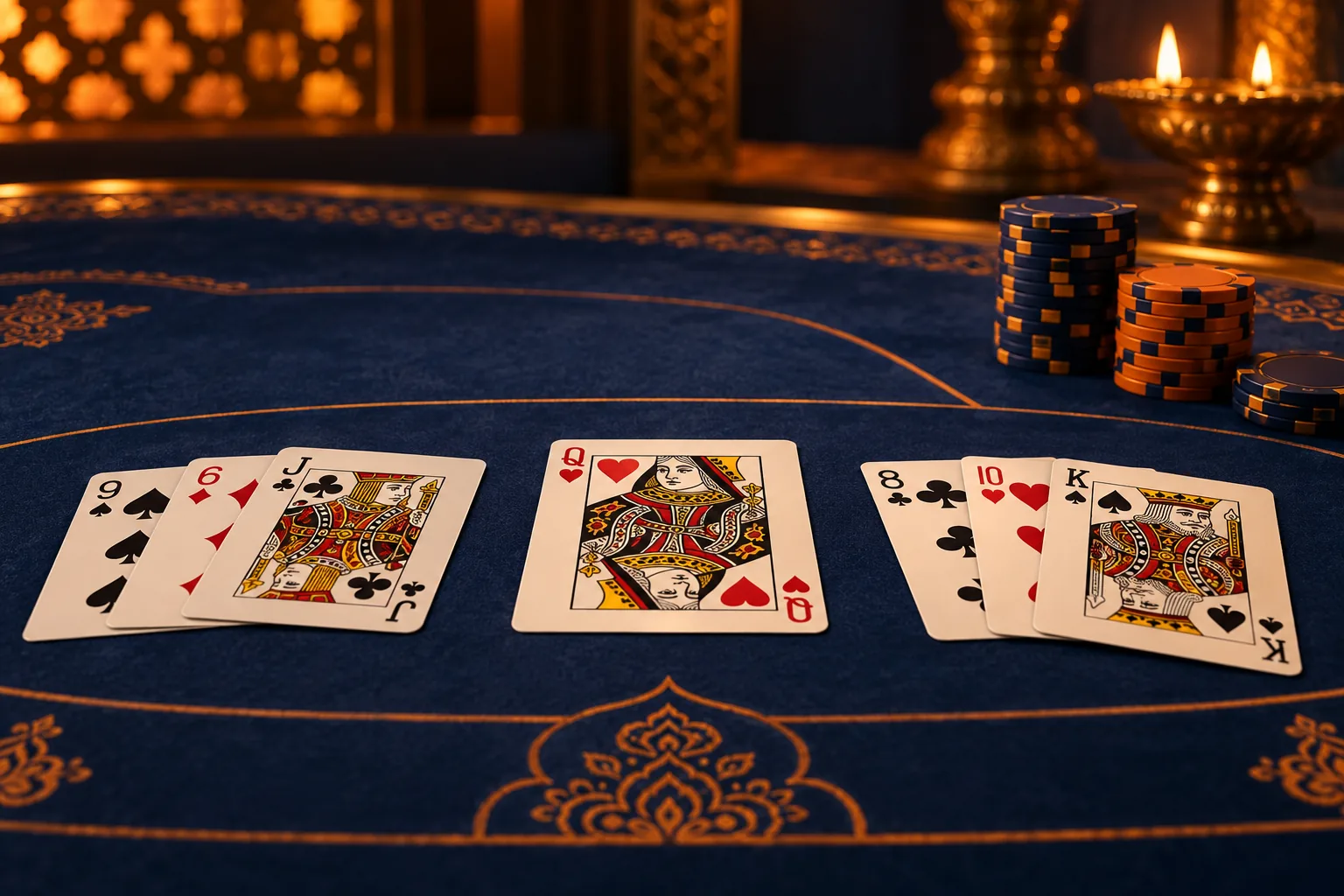
100 Teen Patti
A three-card table-game title listed in the supplied game catalogue.
Provider named in the source catalogue: Rich88.
Source: Jackpotter game catalogue.
Read the source version’s current rules. This reference does not establish availability, game configuration or payout terms for another service.
Return to the game collection →A few familiar cards can tell very different stories. A three-card hand asks one question; a matching rank between two sides asks another. A larger hand of runs and sets unfolds at a different pace again. These contrasting shapes sit at the heart of Teen Patti, Andar Bahar and Rummy, three names in the Skol listing for readers in India.
The attraction of a card game is not only the result. It is also the rhythm created by the deal, the information visible on the table and the relationship between one card and the next. Looking at those qualities makes the three formats easier to distinguish, even before considering a particular version.
Teen Patti: a compact hand
Teen Patti gathers its tension into three cards. In the traditional form described by Pagat, a hand belongs to a ranking, so its identity depends on the combination of ranks and suits. The small number of cards keeps the picture simple while leaving room for uncertainty about what is held elsewhere.
That compactness gives a round a distinctive tempo. There are fewer cards to contemplate than in a Rummy hand, and the importance of each one is immediately apparent. A pair changes the character of a hand; three cards of one rank create another, stronger category. What matters is the relationship among the cards rather than the face value of any single one in isolation.
Teen Patti is also a name with room for variation. Presentation, choices and conditions can differ between versions, even when a familiar ranking sits at the centre. A three-card hand remains the useful starting image: a small group whose meaning comes from the pattern it forms.
Andar Bahar: the matching moment
Andar Bahar creates its drama in a more open arrangement. Pagat’s account describes a face-up reference card and two sides, Andar and Bahar. Cards appear on the sides until one matches the rank of the reference. The round moves towards a single recognisable event: the appearance of that matching rank.
The central card gives everyone a common point of attention. With a queen as the reference, for example, the rank to watch is queen rather than a particular suit. Each exposed card adds to the visible sequence. One deal might reach its match quickly, while another may produce a longer line of cards before the event arrives.
That sequence feels different from a concealed hand. The table accumulates a record as the round progresses, and the visual contrast between the two sides gives the game its clear shape. Specific versions can differ in their dealing procedures and conditions; the broad picture is a matching-card format built around a central rank.
Rummy: a hand that changes
Rummy turns attention from a single comparison to the organisation of a larger hand. In the Indian Paplu form described by Pagat, cards are arranged into runs and sets. A run links consecutive ranks of one suit; a set gathers cards of the same rank across suits. The hand has several relationships to consider at once.
A card can look promising because it sits beside its neighbours in a sequence, or because it belongs with cards of the same rank. Over successive turns the composition changes, and a new card can make one grouping more useful while changing the importance of another. The pleasure of the format lies partly in seeing those connections emerge.
Rummy therefore has a more extended visual rhythm than Andar Bahar. Instead of watching a single shared match arrive, the focus is on a changing collection and the possibility of arranging its parts. The details of valid combinations and any joker rules depend on the version being described.
In each format the same ordinary pack becomes a different kind of visual record. A face-up card can be the reference for an entire Andar Bahar deal; in Rummy it may become part of a sequence; in Teen Patti it contributes to the ranking of a small hand. The surrounding format gives the familiar faces their purpose.
Three ways to see the same pack
Put the three formats side by side and the cards take on different roles. Teen Patti concentrates attention on a small ranked hand. Andar Bahar follows a reference rank across two visible sides. Rummy gives a larger collection an evolving structure. None of those descriptions requires an imagined special deck: the contrast comes from what each format asks the cards to do.
That variety explains why “card games” is a useful umbrella rather than a single experience. A reader drawn to the quick reveal of a matching card may notice different details from someone interested in the patterns of a Rummy hand. In a live presentation, a dealer and camera add another layer to the way the table is seen, while the game’s own structure remains central.
The Skol source listing names these formats alongside slots and live casino. This publication is independent, and its account panels are previews; it does not operate games or process payments. Adults only; gambling involves a risk of loss. Where a particular version is presented, its own rules and conditions govern that version.